
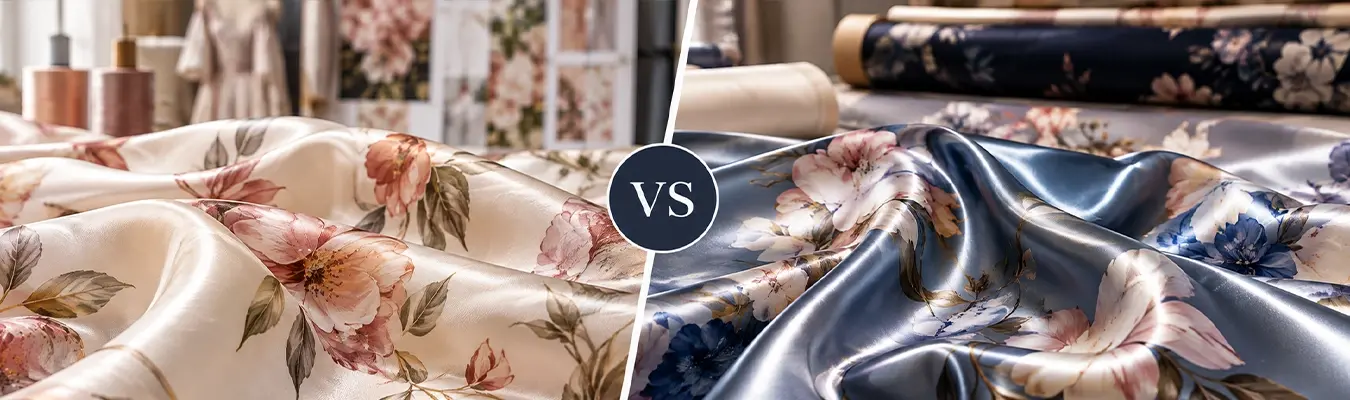
A beautiful print can catch someone’s attention, but the fabric underneath it determines how the final garment looks and feels.
Imagine the same floral design printed on two fabrics. On one, the colours look soft and elegant. On the other, they appear glossy and bold. The artwork has not changed, but the fabric has changed the entire look.
For fashion brands, abaya designers, boutiques, and fabric trader, choosing the right material is an important part of building a successful collection.
When comparing silk vs satin fabric for printing, there is one thing to understand first: silk is a natural fibre, while satin is a type of weave. Satin can be made from silk or polyester, and each option offers a different look, feel, and price point.
So, which should you choose for your next collection? Let’s compare the options.
What Is the Difference Between Silk and Satin?
Silk and satin are often compared as if they are two completely different fabrics. In reality, they describe different things.
Silk is a natural fibre known for its softness, natural lustre, and elegant drape. It can be woven into different fabric types, each with its own texture and appearance.
Satin is a weave that creates a smooth surface with a noticeable sheen. It can be made from silk, polyester, or other fibres.
This means you could choose silk, silk satin, or polyester satin for your collection. The best option depends on the finish you want, the type of garment you are creating, and your budget.
Silk vs Satin Fabric for Printing: Key Differences
Feature | Silk Fabric | Polyester Satin |
Material | Natural fibre | Synthetic fibre |
Appearance | Natural lustre, depending on the weave | Usually smooth with a glossy finish |
Feel | Soft and luxurious | Smooth and often slippery |
Drape | Often fluid and lightweight | Can be fluid, depending on weight and construction |
Printing | Requires a process suitable for silk | Commonly printed using suitable polyester printing methods |
Cost | Usually more expensive | Often more budget-friendly |
Best suited for | Premium fashion and luxury accessories | Commercial collections, occasion wear, and statement designs |
Remember that silk satin is also an option. It combines silk fibres with the glossy satin weave, offering a different experience from polyester satin.
Benefits of printed silk fabric
- A premium appearance: Silk has a distinctive natural lustre that can complement detailed artwork, floral patterns, and elegant colour combinations. The final appearance depends on the silk weave and surface finish.
- A fluid drape: Many silk fabrics fall gracefully around the body, making them suitable for flowing garments, scarves, and selected modest wear designs.
- Comfortable feel: Silk absorbs moisture and can feel comfortable against the skin. This can be useful for products worn directly against the body, although comfort also depends on fabric weight, construction, and climate.
- Suitable for detailed designs: With the correct printing process, silk can reproduce fine lines, intricate motifs, and carefully balanced colours.
What to consider before printing on silk
- Silk generally requires more careful handling than many polyester fabrics. Fabric preparation, printing chemistry, fixation, and washing or finishing must be appropriate for the specific material.
- Silk can also require more careful garment handling and maintenance. For brands planning a large production run, it is worth checking the finished fabric sample before committing to the full quantity.
- Silk is particularly worth considering when the collection is positioned around premium quality and the fabric itself is an important part of the product’s value.
Satin Fabric Printing: Benefits and Considerations
Satin is popular in fashion because its smooth, reflective surface gives printed designs a noticeable finish. However, the fibre used to make the satin determines how it performs.
Benefits of printed satin fabric
- A glossy finish: Satin can enhance the visual impact of bold colours, decorative motifs, and statement prints. Its sheen may also change how colours appear under different lighting conditions.
- A smooth surface: The surface can work well for clean patterns, flowing designs, and artwork intended to stand out on a reflective fabric.
- Different material options: Satin is available in silk, polyester, and other fibre compositions. This gives designers flexibility when balancing appearance, performance, and cost.
- Options for different production budgets: Polyester satin can provide a satin-like appearance at a more accessible price than many silk fabrics, making it useful for collections produced in larger quantities.
What to consider before printing on satin
The smooth surface of satin can snag, and the fabric may be slippery during cutting and stitching. Its sheen can also make print colours look different from how they appear on a computer screen. Before bulk production, check how the print looks under natural and indoor lighting. Assess the fabric’s opacity, drape, and surface finish as well.
Most importantly, confirm whether the satin is made from silk, polyester, or a blend. This determines which printing process is appropriate.
Silk Satin vs Polyester Satin: Which Should You Choose?
This is often the more relevant comparison for designers who want a satin finish but need to decide how much to invest in the fabric.
1. Choose silk satin for premium collections
Silk satin combines the natural properties of silk with the smooth, glossy appearance of a satin weave. It can be suitable for luxury scarves, high-end occasion wear, and collections where natural fibre content is part of the product’s appeal.
It generally comes at a higher cost and may require more careful care. For premium collections, however, the material may justify the investment when its feel, drape, and appearance align with the design.
2. Choose polyester satin for commercial collections
Polyester satin offers a similar glossy appearance without using natural silk. It is often more affordable and can be a practical choice for fashion businesses producing larger quantities or working within a defined price range.
It is also widely used in printed fashion products where bright colours and a smooth surface are important.
However, polyester satin does not have exactly the same moisture absorption or feel as silk satin. The two materials should not be treated as interchangeable simply because they look similar.
3. Check the actual fiber composition.
Fabric names used in textile markets can sometimes describe a style or commercial product rather than a guaranteed fibre composition.
For example, Armani silk is a term used in some fabric markets, including the fabric range listed by Azooni Prints. The name alone should not be taken as proof that a fabric is made from 100% natural silk.
Before choosing a fabric, ask the supplier to confirm its fibre composition, weight, finish, and care requirements. This is particularly important if your brand intends to market the finished garment as pure silk.
Which Fabric Is Best for Printing?
The answer depends on your design and the printing process available.
The printing method must suit the fibre composition. Silk and polyester generally require different dye systems and fixation methods, so choosing a fabric before confirming printing compatibility can lead to disappointing results.
Printing requirement | Fabric consideration |
Intricate patterns and fine details | Both silk and satin can work when the fabric and printing process are suitable |
Natural fibre positioning | Choose a verified silk fabric |
Glossy, statement designs | Silk satin or polyester satin, depending on budget and desired feel |
Larger production quantities | Polyester satin may be more economical |
Soft, flowing garments | Compare the drape and weight of actual samples |
Long-term colour performance | Check the printing method, fixation, washing requirements, and tested colour fastness |
For silk, acid or other compatible textile printing systems may be used, depending on the fabric and process. Polyester is commonly printed using disperse dyes, including dye sublimation where the material and equipment are suitable. Pigment printing is another option for certain fabrics and applications.
There is no single printing method that is best for every silk or satin fabric. A professional printer should confirm the process based on the exact material and intended use.
How to Choose Fabric for Abayas and Modest Wear
For abaya and modest wear designers in the UAE and GCC, fabric selection should balance appearance with comfort, opacity, movement, and the intended price point. This is especially important in abaya printing, where the fabric directly affects how a pattern looks and drapes.
- For premium abayas: Silk or silk satin may be suitable when the design calls for a luxurious feel, fluid movement, and an elevated finish. Consider whether the fabric provides the required coverage and structure.
- For printed shailas and scarves: Silk can offer a soft feel and elegant drape, while polyester satin may suit designs that require a pronounced sheen at a lower material cost. The final choice depends on the desired weight and how the fabric sits when worn.
- For occasion wear: Satin can complement bold floral prints, decorative motifs, and high-contrast designs. Choose the fibre composition based on the intended comfort, care requirements, and selling price.
- For commercial collections: Polyester satin may offer a practical balance between appearance and production cost. Always compare samples before choosing a fabric for a full collection.
In every case, evaluate the fabric as a finished garment, not just as a flat swatch. A print that looks attractive on a table may behave differently once the material is draped, folded, or stitched.
What to Check Before Ordering Printed Fabric in Dubai
If you are sourcing satin fabric printing in Dubai or silk fabric printing in Dubai, review the following points before confirming your order.
- Fabric composition: Confirm whether the material is natural silk, polyester satin, silk satin, or a blend.
- Print sample: Request a sample or strike-off to assess colour accuracy, sharpness, and the effect of the fabric’s sheen.
- Fabric weight and drape: Check whether the material suits the garment pattern and intended fit.
- Colour fastness: Ask about appropriate testing for washing, rubbing, and other conditions relevant to the product.
- Finishing process: Confirm that the printing and finishing methods are suitable for the selected fabric.
- Order quantity and lead time: Check the minimum order requirements, production schedule, and availability of the chosen material before planning your launch.
These checks can help reduce production issues and make it easier to maintain consistency across a collection.
Printed Silk and Satin Fabric at Azooni Prints
Azooni Prints offers custom fabric printing in Dubai for fashion brands, designers, boutiques, and businesses across the GCC. Its fabric range includes silk and satin options, with printing services for applications such as abayas, shailas, dresses, scarves, and other fashion products.
You can explore its silk fabric printing services and satin fabric printing services to learn more about the available options.
Before placing a bulk order, discuss your design, intended garment, fabric composition, and print requirements with the team. Requesting a sample can help you evaluate the finished result before moving into production.
Frequently Asked Questions:
Is silk better than satin for fabric printing?
Neither is automatically better. Silk is a natural fibre, while satin describes a weave. Silk can be printed using suitable textile printing methods, and satin can also produce excellent results when the process matches its fibre composition.
What is the difference between silk satin and polyester satin?
Silk satin is made using silk fibres in a satin weave, while polyester satin uses polyester fibres. Silk satin generally offers the feel and moisture absorption associated with natural silk. Polyester satin is often more affordable and can be easier to care for.
Is polyester satin good for printed clothing?
Yes. Polyester satin can be suitable for printed dresses, scarves, occasion wear, and other fashion products. The result depends on the fabric quality, print method, and intended use.
What is Armani silk?
Armani silk is a commercial fabric name used in some textile markets. It should not automatically be interpreted as 100% natural silk. Confirm the actual fibre composition and fabric specifications with the supplier before ordering.
Which fabric is best for printing abayas and shailas?
The best fabric depends on the design, required drape, opacity, comfort, finish, and budget. Silk may suit premium collections, while polyester satin can be an option for glossy printed designs at a more accessible price. Compare samples before deciding.
Where can I get silk or satin fabric printing in Dubai?
Azooni Prints provides silk and satin fabric printing services in Dubai and serves fashion businesses across the UAE and GCC. You can contact the company to discuss your design and production requirements.
Choose the Fabric That Brings Your Design to Life
The right fabric should make your design look good, feel right, and work for the customers you want to reach.
Silk is worth considering when natural fibre, softness, and elegant drape are priorities. Satin is a strong option when you want a smooth, glossy finish, with polyester satin offering a more budget-friendly alternative to silk satin in many cases.
Before making your final choice, compare samples and confirm the fabric composition and printing requirements. A little testing before production can help you avoid costly surprises later.
Planning your next printed collection? Contact Azooni Prints to discuss your fabric options and custom printing requirements.