
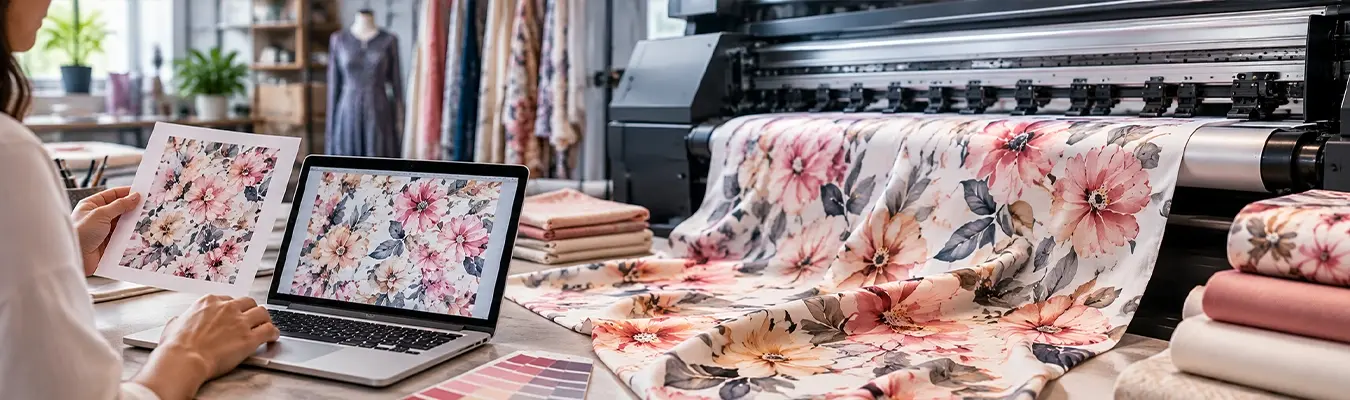
Have a fabric design in mind but cannot find the right print in the market? Whether you are developing a fashion collection, creating distinctive abaya designs or preparing textiles for your business, custom fabric printing allows you to bring your ideas to life.
With print-on-demand fabric printing in Dubai, you can create fabric featuring your own patterns, artwork, and color combinations instead of relying entirely on ready-made designs. From floral prints and geometric patterns to exclusive designs for a clothing brand, custom printing gives you more control over the final result.
However, getting your design printed involves more than simply sending an image to a printer. You need to choose a suitable fabric, prepare the artwork, understand the printing process, and confirm the order requirements.
This guide explains how to get your own fabric design printed in Dubai, what to consider before placing an order and how to choose the right options for your project.
What Is Print on Demand Fabric Printing?
Print-on-demand fabric printing is a process in which a custom design is printed onto fabric to your specifications. Instead of purchasing material with an existing pattern, you provide your own artwork and have it printed onto a suitable fabric.
This approach is useful when you want a particular design, color combination, or pattern that is not readily available in the market.
For example, an abaya fabric printing designer may want a subtle floral pattern in a specific color palette. A fashion brand may need an exclusive print for its seasonal collection, while a boutique might want a distinctive design that reflects its identity.
Custom fabric printing allows you to develop these designs around your intended product.
It can be used for:
- Abayas, dresses, and other fashion garments.
- Scarves and fashion accessories.
- Custom prints for clothing brands and boutiques.
- Repeating patterns and original textile artwork.
- Small fashion collections and larger production orders, subject to the printer’s minimum quantity.
- Branded textiles and creative projects.
One important point to understand is that print on demand does not always mean ordering just one meter of fabric. Some printing services have minimum order quantities based on the fabric, design, color, or printing method. Always confirm these requirements before finalising your artwork.
Who Needs Custom Fabric Printing in Dubai?
Custom fabric printing can benefit anyone who wants greater control over the appearance of their textiles. It is particularly useful for businesses and designers who want to develop original products rather than depend entirely on ready-made prints.
1. Fashion Designers and Clothing Brands
For fashion designers, fabric is an important part of the creative process. A custom print can help establish the look of a collection, complement a garment’s design and create a consistent visual identity.
For example, a designer developing a summer collection may want botanical patterns in soft colors, while a contemporary clothing brand may prefer bold geometric designs. Custom printing allows the artwork to be developed around the collection.
2. Abaya and Modest Fashion Brands
Abaya designers often need prints that complement the garment’s shape, fabric and overall finish. Subtle patterns, delicate motifs and carefully selected color combinations can help create a distinctive look without overwhelming the design.
The material matters as much as the artwork. A print intended for a flowing abaya may require a different fabric from one designed for a structured garment.
3. Boutiques and Retail Businesses
Boutiques can use custom-printed fabrics to develop exclusive products and seasonal collections. Instead of choosing from commonly available patterns, they can create designs that align with their customers’ preferences and brand identity.
Before committing to a production order, however, it is important to understand the minimum quantity and total cost.
4. Startups and Independent Creators
Custom printing can also help independent designers turn an original concept into a physical product. Whether you are developing your first collection or testing a new pattern, you can explore suitable fabrics and printing options before moving into production.
If you are working with a limited budget, ask about sample printing, minimum quantities and the cost of producing different designs.
How to Get Your Own Fabric Design Printed in Dubai
If you want to print your own fabric design in Dubai, following a clear process can help you avoid common mistakes and make better decisions before placing an order.
Step 1: Decide What You Want to Create
Start by identifying the finished product for which you need the fabric.
Are you designing an abaya, dress, scarf, or another textile product? Will the fabric be used for everyday clothing, occasion wear or a premium fashion collection?
Your answers will influence the material, print size, color choices and overall finish you need.
For example, a delicate floral design may work well for a flowing garment, while a large geometric pattern may be more suitable for a bold statement piece.
It is also helpful to decide whether you need an all-over repeating print, a single large illustration, or a pattern placed in specific areas of the fabric.
Step 2: Choose the Right Fabric
Not every fabric produces the same result. Its texture, composition, weight and surface finish can affect how the design appears and how the finished garment behaves.
Some fabrics have a smooth surface that can suit detailed artwork, while others have a more noticeable texture that influences the final appearance.
Common fabric options to explore include:
1. Armani Silk: Often considered for flowing fashion garments and designs that call for a smooth appearance. Confirm the exact fabric composition and printing suitability before ordering.
2. Matte Crepe: An option for designs where a less reflective surface is preferred. The specific result depends on the fabric composition and finish.
3. Shiny Crepe: Worth considering when a more reflective appearance is part of the intended design.
4. Linen Crepe: May suit projects where a textured appearance is desirable. Confirm that the material meets the requirements of your finished product.
5. Taffeta: Can be considered for garments that require a more structured appearance or a particular sheen.
These are examples of materials that may be available through fabric printing suppliers. Availability varies, so confirm the current fabric range and whether your chosen material is suitable for the proposed printing process.
Before making a decision, consider the following:
- Appearance: Do you want a matte, shiny, smooth or textured finish?
- Drape: Should the fabric fall softly or hold its shape?
- Design details: Does the artwork contain fine lines, small motifs or large patterns?
- End use: Will the material be used for clothing, scarves or another product?
- Care requirements: Does the finished product need to meet specific washing or handling requirements?
Choosing the right fabric before finalising the artwork can help you achieve a more suitable result.
Step 3: Prepare Your Fabric Print Design
Once you have chosen the fabric, the next step is to prepare your artwork.
A design that looks sharp on a phone or computer screen may not look the same when printed at full size. Low-resolution images can appear blurry, while poorly prepared repeating patterns may have visible gaps or misaligned edges.
Before submitting your design, check the following:
1. Image resolution: Use artwork with sufficient resolution for the intended print size. Enlarging a small image does not automatically improve its quality.
2. Design dimensions: Make sure the artwork is prepared at the required size and scale.
3. Color selection: Specify the intended colors and ask about the printer’s color requirements. Screen colors can differ from printed colors.
4. Pattern repeat: If you want an all-over pattern, ensure the edges connect correctly when the design is repeated across the fabric.
5. File format: Confirm which formats the printing service accepts. Requirements may vary depending on the equipment and workflow.
6. Artwork ownership: Make sure you have permission to use the artwork, especially if it includes illustrations, photographs, or designs created by someone else.
If your design is not ready for production, ask whether artwork preparation or design assistance is available. Getting the file checked before printing can help prevent avoidable errors.
Step 4: Send Your Design for Fabric Printing
After preparing your artwork, share it with the printing service and provide the details needed to assess your order.
When you send a design for fabric printing, include more than just the image file. The supplier also needs to understand the intended material, quantity, and final application.
Your inquiry should ideally include:
- Your design file or a clear artwork reference.
- The fabric you want to use.
- The quantity required in metres.
- Your preferred colors and print dimensions.
- Whether the design is a repeating pattern or a placement print.
- The intended use of the printed fabric.
- Your expected production and delivery timeline.
Providing this information helps the supplier understand your requirements and recommend suitable options.
If you are unsure about the fabric or printing method, explain what you plan to make. A supplier may be able to guide you towards a material that better suits your project.
Step 5: Review a Sample Before Production
If sampling is available, consider reviewing a printed sample before approving the full order.
A sample allows you to assess how the artwork looks on the actual fabric rather than relying only on a digital preview.
Pay attention to the following:
- Whether the colors look as expected.
- Whether fine details and lines are clear.
- Whether the pattern is printed at the correct scale.
- Whether repeating elements align properly.
- Whether the fabric’s texture and appearance suit the intended garment.
Color matching deserves particular attention. A design displayed on a screen may look brighter or different from the final printed fabric because screens and printing processes reproduce color differently.
For commercial collections, keep a record of the approved artwork and sample specifications. This gives you a reference when discussing the production order.
Step 6: Confirm the Minimum Order and Pricing
Before approving production, clarify the minimum quantity, total cost, and other order conditions.
Some fabric printers accept relatively small orders, while others require a minimum number of metres per design or color. There is no single minimum that applies to every fabric printing service.
Ask these questions before placing your order:
- What is the minimum quantity for the selected fabric?
- Does the minimum apply per color, design or order?
- Is there a separate charge for sampling?
- What is the price per metre?
- Are artwork preparation or finishing charges applicable?
- How long will production take?
- What delivery options are available in Dubai or elsewhere in the UAE?
Confirming these details early helps you estimate the total cost and plan your production more effectively.
Step 7: Approve the Artwork and Start Production
Once the material, artwork, sample, and quotation have been approved, confirm the final order specifications.
Check that the supplier has the correct design file, fabric choice, quantity, and production instructions. If you are ordering multiple designs, make sure each one is clearly identified.
For fashion brands and businesses, this final review is particularly important because printing errors can affect the usability of the fabric and the overall production schedule.
Keep your approved artwork and order details for future reference, especially if you intend to reorder the same design.
Which Printing Method Is Suitable for Custom Fabric?
The right printing method depends on the fabric composition, design complexity, required finish, and intended use.
1. Digital Fabric Printing
Custom digital printing on fabric uses digital artwork to produce designs directly onto suitable textile materials. It can be useful for detailed illustrations, multicolor patterns, and designs that need to be reproduced from a digital file.
The suitability of digital printing depends on the fabric and the printing technology being used. Different materials may require different inks, preparation steps and finishing processes.
Digital printing should not be assumed to deliver identical results on every fabric. Always confirm which materials are compatible with the available process.
2. Other Fabric Printing Methods
Other printing methods may be suitable depending on the material and production requirements. Some are better suited to particular fabrics, while others may be more practical for certain order sizes or design types.
When comparing options, ask about color reproduction, fine details, fabric compatibility, production quantity, and the expected finish.
The goal is not simply to choose the newest printing technology. It is to select a process that works with your fabric and delivers the result your project requires.
What Affects the Cost of Custom Fabric Printing in Dubai?
The cost of custom fabric printing with your own design depends on several factors. Understanding these variables can help you plan your budget and compare quotations more accurately.
Fabric Type
Different materials have different costs and printing requirements. The fabric you choose can influence the overall price as well as the final appearance.
Order Quantity
The number of meters required affects the total order cost. Some suppliers offer different pricing for larger quantities, while others apply minimum quantities per design or color. If you need several designs for one collection, ask how the minimum order is calculated for each one.
Artwork Preparation
If your artwork is already print-ready, the preparation process may be more straightforward. Complex files, pattern adjustments or design assistance may involve additional work or charges.
Printing Method
The printing process must suit the selected material and intended result. Different methods can have different production requirements and costs.
Sampling and Finishing
A sample, additional finishing, or other production requirements may affect the final quotation. Confirm which services are included in the quoted price.
Delivery Requirements
Delivery arrangements and timelines can also affect the overall cost and planning of your order. For an accurate estimate, provide the supplier with your artwork, preferred fabric, quantity and delivery requirements. Comparing quotations on the basis of the same specifications makes it easier to evaluate the options.
Common Mistakes to Avoid When Printing Your Own Fabric Design
Even a good design can produce disappointing results if important production details are overlooked. A few simple checks can help you avoid common problems.
1. Choosing Fabric Before Considering the Finished Product
A fabric may look attractive on its own but may not suit the garment you intend to make. Consider its drape, texture, weight, and intended use before placing an order.
2. Submitting Low-Quality Artwork
Low-resolution files can lose detail when enlarged. Check the image dimensions and resolution, and confirm the printer’s requirements before submitting the design.
3. Ignoring the Pattern Repeat
For repeating prints, the edges must connect correctly. Otherwise, unwanted lines or gaps may appear where the pattern joins.
4. Assuming Screen Colors Will Match Exactly
Colors on digital screens can differ from printed results. If color accuracy is important, ask about sampling and review the printed material before approving production.
5. Overlooking the Minimum Order Quantity
A minimum order can affect your budget, particularly if you are developing several designs. Confirm whether the requirement applies to each color, design, or fabric type.
6. Skipping Sample Approval
Approving a large order without checking the result can increase the risk of receiving fabric that does not meet your expectations. Where sampling is available, use it to assess the design and material before production.
7. Not Confirming the Delivery Timeline
If the fabric is needed for a collection launch or garment production schedule, confirm the expected completion date before placing the order. Allow time for sampling, artwork changes, and production.
How to Choose a Fabric Printing Service in Dubai
Choosing a suitable supplier involves more than comparing the price per meter. You also need to consider fabric options, printing capabilities, order requirements, and the level of support available.
Before making a decision, evaluate the following factors.
- Fabric selection: Check whether the supplier offers materials suitable for your intended product.
- Printing capabilities: Ask whether the available process can reproduce your artwork and whether it is compatible with your chosen fabric.
- Sample options: Find out whether you can review the printed result before approving the full order.
- Minimum quantities: Confirm the minimum order and how it applies to multiple designs or colors.
- Artwork support: If your file needs adjustments, ask whether the supplier can help prepare it for printing.
- Pricing transparency: Request a quotation that clearly explains the fabric cost, printing charges, and any additional fees.
- Production and delivery: Confirm the expected timeline and delivery arrangements before committing to the order.
A supplier that clearly explains these requirements can help you make a more informed decision