
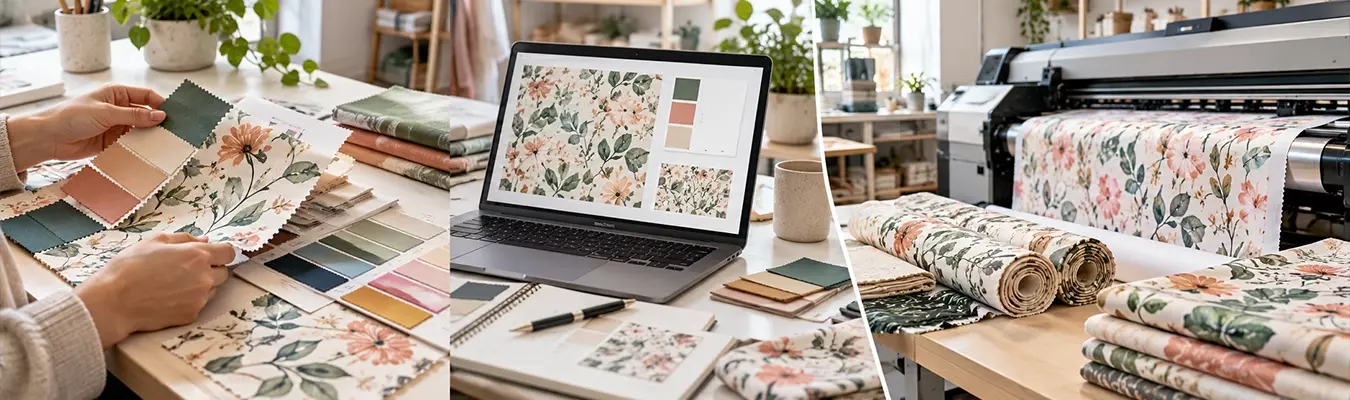
Placing your first fabric printing order can feel complicated when you are unsure what information to provide or where to begin. From selecting the right material to preparing artwork and approving a sample, each step can affect the final result.
Whether you are a fashion designer, clothing brand, boutique owner, or creative business, understanding the fabric printing process can help you avoid common mistakes and make your first custom fabric printing order much smoother.
Step 1: Decide What You Want to Print
Start by defining what you plan to make with the printed fabric.
It could be:
- Dresses, shirts or other garments
- Abayas and scarves
- Home textiles
- Fashion accessories
- Branded products
- A new clothing collection
- Custom textiles for a creative project
Your end product will influence the fabric, printing method, finish and quantity you need.
For example, a lightweight material may work well for flowing garments, while a heavier fabric could be more suitable for bags or home decor.
Step 2: Choose the Right Fabric
Fabric selection is one of the most important parts of the fabric printing process.
Different fabrics absorb and display colour differently. Their texture, weight, weave, fibre composition and finish can all influence the appearance of the final print.
Depending on your project, you may consider materials such as cotton, silk, chiffon, crepe, linen, polyester and speciality fabrics. If you are unsure which material to choose, explain how you intend to use the finished fabric. A fabric printing supplier can then help you identify options that suit your design and end use.
Step 3: Prepare Your Design
Next, prepare the artwork you want printed.
Your design could be:
- A repeat pattern
- Illustration
- Logo or branding
- Photograph
- Custom motif
- Multi-colour fashion print
Before submitting the artwork, check its resolution, dimensions, colours and repeat pattern if required.
If you are ordering custom printed fabric, make sure the artwork has enough resolution to maintain its details at the required print size.
If you do not have a finished design, some fabric printing companies may also provide design assistance or artwork preparation.
Step 4: Confirm the Printing Requirements
Once your fabric and artwork are ready, discuss the details of your fabric printing order with the printer.
Be prepared to provide:
- Fabric type
- Design file
- Required quantity
- Print dimensions
- Number of colours
- Intended use
- Preferred finish
- Delivery requirements
The fabric printing method may also depend on the material and design. Digital printing, screen printing and sublimation are some of the methods used for textile applications. If you have specific brand colours or colour references, communicate them before production begins.
Step 5: Confirm the Quantity and Minimum Order
Before placing an order, check the printer’s minimum quantity.
Minimum order requirements can vary depending on the fabric and printing method. If you are developing a new collection, make sure your planned quantity meets the required minimum before finalising the order. It is also worth asking whether different designs or colourways can be included in the same order.
Step 6: Request a Printed Sample
If this is your first order or you are planning a larger production run, requesting a sample is a sensible step.
A design viewed on a computer screen may not look exactly the same when printed onto fabric. The material itself can affect colour, contrast, sharpness and overall appearance.
A sample allows you to check:
- Colour appearance
- Print sharpness
- Design scale
- Pattern placement
- Fabric feel
- Overall finish
For custom fabric printing, sampling can help identify issues before they affect a larger production quantity.
Step 7: Review the Quote
After confirming the fabric, artwork and quantity, request a detailed quotation.
The cost of fabric printing can depend on factors such as:
- Fabric type
- Printing method
- Quantity
- Number of colours
- Finishing requirements
- Additional design services
For larger requirements, ask whether bulk pricing is available. Before approving the quotation, make sure you understand what is included in the price and whether there are any additional charges.
Step 8: Confirm the Production Timeline
If you need the printed fabric for a collection launch, manufacturing schedule, fashion event or client deadline, discuss the delivery date before confirming your order.
Ask when the production timeline begins. It may start after artwork approval, sample approval or final order confirmation. Allow some additional time for shipping and any required quality checks, especially when working toward a fixed deadline.
Step 9: Approve the Final Details
Before production starts, review the order one final time.
Confirm:
Fabric: Is the correct material selected?
Artwork: Is the final design being printed?
Quantity: Does it match your requirement?
Colours: Have the colours or sample been approved?
Print size: Is the design scale correct?
Delivery: Is the expected timeline clear?
Once these details are confirmed, production can begin with fewer chances of avoidable changes.
Step 10: Inspect the Fabric When It Arrives
Once your fabric printing order is delivered, inspect the material before cutting or manufacturing.
Check for:
- Colour consistency
- Print clarity
- Pattern alignment
- Fabric defects
- Unexpected marks or variations
- Correct quantity
If you identify an issue, document it with photographs and contact the fabric printing supplier promptly.
Common Mistakes to Avoid
- Choosing fabric only by appearance: Consider the fabric’s weight, texture, drape, durability and intended use before making a decision.
- Using a low-quality design file: Poor-resolution artwork can affect print sharpness. Always check the required file format and resolution before submitting your design.
- Skipping the sample: A sample helps you check the actual colours, design scale and print quality before placing a larger order.
- Ignoring minimum order quantities: Confirm the minimum quantity with your fabric printing supplier before planning your custom fabric printing project.
- Not discussing your deadline: Tell the printer your required delivery date in advance, especially if the fabric is needed for a specific production schedule.
First Fabric Printing Order Checklist
Before contacting a fabric printing company, make sure you have these details ready:
End Product: Know what you plan to make with the fabric.
Fabric: Choose your preferred fabric or define your fabric requirements.
Artwork: Keep your final design file ready in the required format and resolution.
Quantity: Confirm how many metres you need and check the minimum order requirement.
Colours: Provide colour references or specifications where required.
Print Size: Confirm the design dimensions or repeat pattern.
Finish: Specify any particular finishing requirements.
Sample: Decide whether you need a printed sample before bulk production.
Delivery Date: Share your required delivery date before confirming the order.
Final Thoughts
Your first fabric printing order does not have to be complicated. The key is to work through the process in the right order: define the end use, select the fabric, prepare the artwork, confirm the printing requirements, check the quantity, approve a sample and then move into production.
A clear brief and proper sample approval can help reduce colour, fabric, quantity and design issues.
Whether you are developing your first collection or ordering custom printed fabric for an established business, understanding the process beforehand can make the entire experience easier and more predictable. If you are ready to begin, contact the Azooni Prints team with your artwork, fabric, and quantity details to get a quote.
Frequently Asked Questions:
You will generally need to provide your preferred fabric, artwork, quantity, colour requirements, print specifications and intended use. Your fabric printing supplier can then advise you on suitable options.
Yes. A printed sample allows you to check the actual fabric, colours, print quality and design scale before committing to a larger fabric printing order.
Minimum quantities vary between fabric printing companies, fabrics and printing methods. Always confirm the minimum quantity before placing your order.
The timeline depends on the fabric, design, quantity, printing method and production requirements. Confirm the expected lead time with your fabric printing supplier before placing the order.
Yes. Custom fabric printing generally allows you to submit your own artwork, subject to the printer’s file, resolution and colour requirements.
Yes. If you are unsure which fabric is appropriate, explain your finished product and how the material will be used. A fabric printing company can help you identify a suitable option.