
Choosing the right printing method can make a big difference to how a fabric looks, feels and performs. A detailed fashion print may need a different approach than a bold logo, while an all-over design on polyester may require another method altogether.
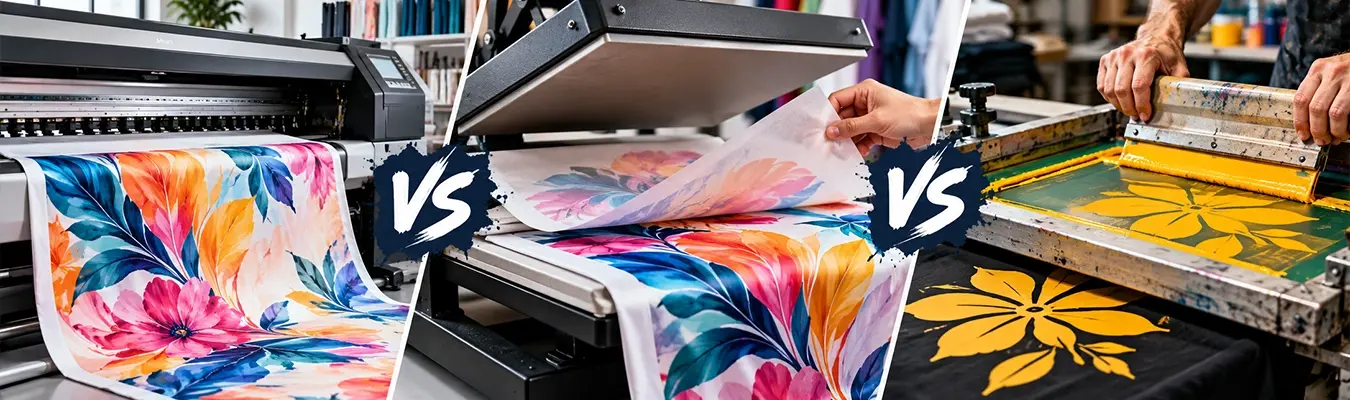
Among the most commonly considered options are digital printing, sublimation printing and screen printing. Each method works differently and has its own strengths.
So, which one should you choose?
The answer depends on your fabric, design, quantity, colours and final product. This guide explains the differences between digital, sublimation and screen printing in simple terms so you can choose the right option for your fashion or textile project.
What Is Digital Fabric Printing?
Digital fabric printing is a modern printing method where a digital design is printed directly onto fabric using specialised textile printers.
Unlike traditional screen printing, there is no need to create a separate screen for every colour. This makes digital printing particularly useful for detailed and customised designs.
It can reproduce:
- Detailed patterns
- Photographic designs
- Multiple colours
- Gradients and colour transitions
- Illustrations
- Repeating patterns
- Custom artwork
For fashion brands, digital printing can be useful when creating unique collections, limited-edition designs, or fabrics with complex artwork, including abaya printing with detailed all-over designs.
When Should You Choose Digital Printing?
Digital printing may be suitable when you need:
- Highly detailed designs
- Many colours in one design
- Custom or personalised artwork
- Small to medium production quantities
- Quick design changes
- Complex patterns and gradients
One of its biggest advantages is flexibility. You can make changes to the artwork without having to create new screens for each colour.
What Is Sublimation Printing?
Sublimation printing is a heat-transfer printing process that uses special dyes and heat to transfer the design into suitable synthetic fabric. It is most commonly associated with polyester and polyester-rich materials.
During the process, the dye turns into a gas under heat and bonds with the fibres of the fabric. Because the colour becomes part of the fabric rather than sitting as a thick layer on top, sublimation can produce smooth and detailed prints.
When Is Sublimation Printing Suitable?
Sublimation is commonly considered for:
- Polyester fabrics
- Sportswear
- Activewear
- All-over prints
- Custom uniforms
- Detailed synthetic-fabric designs
However, sublimation is not suitable for every fabric. If you are working with cotton fabric printing, silk fabric printing or another natural fibre, you may need to consider a different printing method.
What Is Screen Printing?
Screen printing is a traditional printing method that uses a mesh screen to transfer ink onto fabric. Each colour in the design generally requires a separate screen. This means that a design with fewer colours can be simpler to produce than a highly detailed, multi-colour design. Screen printing is known for producing strong, bold prints and can be particularly useful for larger quantities.
When Should You Choose Screen Printing?
Screen printing may be a good option for:
- Bold graphics
- Simple designs
- Solid colours
- Logos
- Repeated designs
- Larger production quantities
It can be especially useful when the same design needs to be printed across a large number of garments or fabric pieces.
Digital vs. Sublimation vs. Screen Printing
The three methods differ mainly in how they print the design and what types of projects they are best suited to.
Feature | Digital Printing | Sublimation Printing | Screen Printing |
Best for | Detailed and custom designs | Polyester and all-over prints | Bold and simple designs |
Design detail | Excellent | Excellent | Better for simpler designs |
Multiple colours | Suitable | Suitable | More preparation required |
Fabric compatibility | Depends on fabric and ink system | Mainly suitable synthetic fabrics | Works with many fabrics using suitable inks |
Small quantities | Often suitable | Often suitable | May be less practical |
Large quantities | Suitable depending on project | Suitable | Often well suited |
Gradients | Excellent | Excellent | More difficult |
Custom designs | Excellent | Excellent for suitable fabrics | Suitable, especially for simpler designs |
The table provides a general comparison. The actual result depends on the fabric, ink, equipment, artwork and production requirements.
Which Printing Method Is Best for Detailed Designs?
If your design contains fine details, photographs, gradients or many colours, digital printing is often worth considering. Because the artwork is transferred digitally, it can reproduce complex designs without requiring a separate screen for every colour. Sublimation can also produce highly detailed designs, but it is mainly suitable for compatible synthetic fabrics.
Screen printing can produce high-quality results, but highly detailed, multi-colour artwork may require more preparation.
Which Method Is Best for Polyester Fabric?
For suitable polyester fabrics, sublimation printing is a common option.
It is particularly useful when you want the design to cover a large area of the fabric. This is one reason it is widely associated with sportswear, activewear and custom polyester products.
Digital printing can also be used on polyester, depending on the printing technology and ink system being used. The important point is to check the fabric and printing technology together rather than choosing the method based on the design alone.
Which Method Is Best for Large Orders?
For large orders, screen printing can be worth considering, particularly when the design is relatively simple and will be repeated many times. Once the screens are prepared, the same design can be reproduced efficiently across a larger quantity.
Digital and sublimation printing can also be used for larger orders, depending on the design, fabric, equipment and production requirements. So, order size should be considered alongside design complexity and fabric type.
Which Method Gives the Most Design Flexibility?
When it comes to design flexibility, digital printing is a strong option to consider. It allows designers to work with detailed artwork, multiple colours, photographs and gradients without simplifying the design into a limited number of colour layers.
This can be particularly useful for fashion brands that regularly introduce new prints and want greater freedom when developing collections.
Fabric Choice Matters
A common mistake is choosing the printing method before deciding what fabric will be used.
The fabric can affect:
- How the colours appear
- How sharp the design looks
- How the print feels
- How well the print holds up
- Whether a particular printing method is suitable
For example, sublimation is mainly intended for suitable synthetic fabrics, while other printing methods may offer different fabric options.
Before production, always confirm that the fabric and printing method are compatible.
Should You Get a Fabric Printing Sample?
Yes, especially when the print is being used for a new fashion collection. A design can look different on a computer screen compared with the finished fabric. The fabric surface, colour and printing process can all affect the final appearance.
A sample allows you to check:
- Print colours
- Design size
- Pattern placement
- Fabric feel
- Print quality
- Overall appearance
It is much easier to make changes at the sample stage than after a large quantity has already been produced.
How to Choose the Right Printing Method
Instead of choosing a printing method simply because it is popular, start with your actual requirements.
Choose Digital Printing If:
You need detailed artwork, multiple colours, gradients, photographs or custom patterns. It can also be a practical option when you are producing smaller collections or frequently changing designs.
Choose Sublimation If:
You are printing on a suitable synthetic fabric, particularly polyester, and need detailed or all-over designs.
Choose Screen Printing If:
You have a bold or relatively simple design and need to reproduce it across a larger quantity.
Common Mistakes to Avoid
- Choosing the printing method based only on price: A cheaper option may not give you the finish or flexibility your design requires.
- Ignoring the fabric: Not every printing method works with every fabric.
- Skipping the sample: A sample helps you see how the design actually looks on fabric.
- Using poor-quality artwork: Low-resolution files can affect print clarity and detail.
- Not checking the quantity: Production requirements can vary between printing methods, so confirm minimum quantities and pricing before ordering.
- Forgetting about the final product: A print that looks good on fabric should also suit the garment or product you are planning to make.
Digital vs. Sublimation vs. Screen Printing: Quick Decision Guide
If you are still unsure, start with these simple questions:
Is your design detailed and highly customised?
Consider digital printing.
Are you printing on suitable polyester fabric?
Consider sublimation printing.
Is your design bold, simple and being produced in a larger quantity?
Consider screen printing.
Are you working with a specific fabric?
Check which printing methods are compatible with it before making a decision.
The Right Printing Method Depends on Your Project
There is no single printing method that is right for every fashion brand or textile project.
Digital printing offers flexibility for detailed and customised designs. Sublimation printing is particularly useful for suitable synthetic fabrics such as polyester, especially for all-over designs. Screen printing can be a practical choice for bold designs and larger quantities.
The best place to start is with your fabric, design and quantity. Once these are clear, it becomes much easier to identify the printing method that fits your project. A sample can then help you confirm the final look before moving into larger production.
Not sure which method suits your fabric and design? Contact the Azooni Prints team to discuss your project and get a quote.
FAQ's:
Neither method is universally better. Digital printing can be more suitable for detailed, multi-colour and customised designs, while screen printing can work well for bold designs and larger quantities.
It depends on the project. Sublimation is particularly suited to compatible synthetic fabrics such as polyester, while digital printing can offer greater flexibility across different designs and applications, depending on the fabric and printing system.
The right choice depends on the collection. Digital printing can suit detailed custom designs, sublimation can work well for polyester-based products, and screen printing can suit bold designs produced in larger quantities.
Digital printing is often considered suitable for smaller production runs because it does not require the same screen preparation used in traditional screen printing.
Standard dye-sublimation printing is primarily designed for suitable synthetic fabrics, especially polyester. It is not normally the first choice for printing directly onto untreated cotton.
Sublimation can be a strong option for all-over designs on suitable polyester fabrics. Digital printing can also be used for all-over textile designs depending on the fabric and printing system.